Any text editor will do!
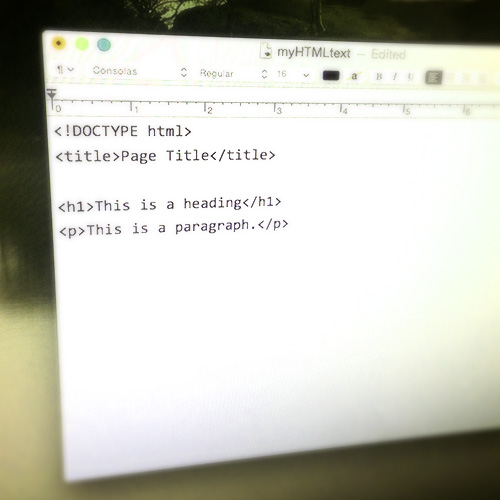
The first computer programs were actually configurations of connections between circuits. A programmer would design the setup, then a host of people would reconfigure patch cords and the like to realize the program. The next step was flipping bits to write machine code directly to the computer memory. Fortunately, we won't be going back that far in creating source for Web apps.
The next step in programming history was made using very basic text editors. Text could be edited one line at a time, and there was no concept of GUI (Graphics User Interface). Now, it turns out, that is enough to create a Web page, as its source is simply text. But that would be painfully tedious. Stepping up, we finally had text editors that were more visually oriented, in fact one early example was called "Vim" (previously known as Vi - for "Visual").
Simple visual editors are quite capable; in fact a great deal of the Web was built using visual editors of one sort or another. Thus if you're familiar with Notepad or TextEdit or even Vim, you can produce a Web page. Of course, innovation didn't stop there and visual editors have incrementally improved to help you write code in particular languages or detect errors, etc.
All that is to say that there are lots of options when it comes to creating Web pages. There are, of course, GUI drag and drop solutions, where you can create a Web page as you would a diagram or picture, but we want to learn the nitty-gritty details of HTML, so we'll ignore those options.


0 comments:
Post a Comment